Three islands, three lessons for the nervous system.
Field notes from a trip through Borneo, Bali and Sumba.
For several weeks in early 2026, I travelled through three Indonesian islands with a single question in mind: what does the nervous system actually need in order to feel safe? Not performatively calm. Not numbed. Just, genuinely, at ease — the kind of ease that lets the body rest, connect and be present.
What I found wasn't a set of answers. It was a series of places and practices that seemed to know something about rest — and that changed how I think about my own work.
Borneo answered with sound. Bali with slowness. Sumba with silence.
What follows are field notes.
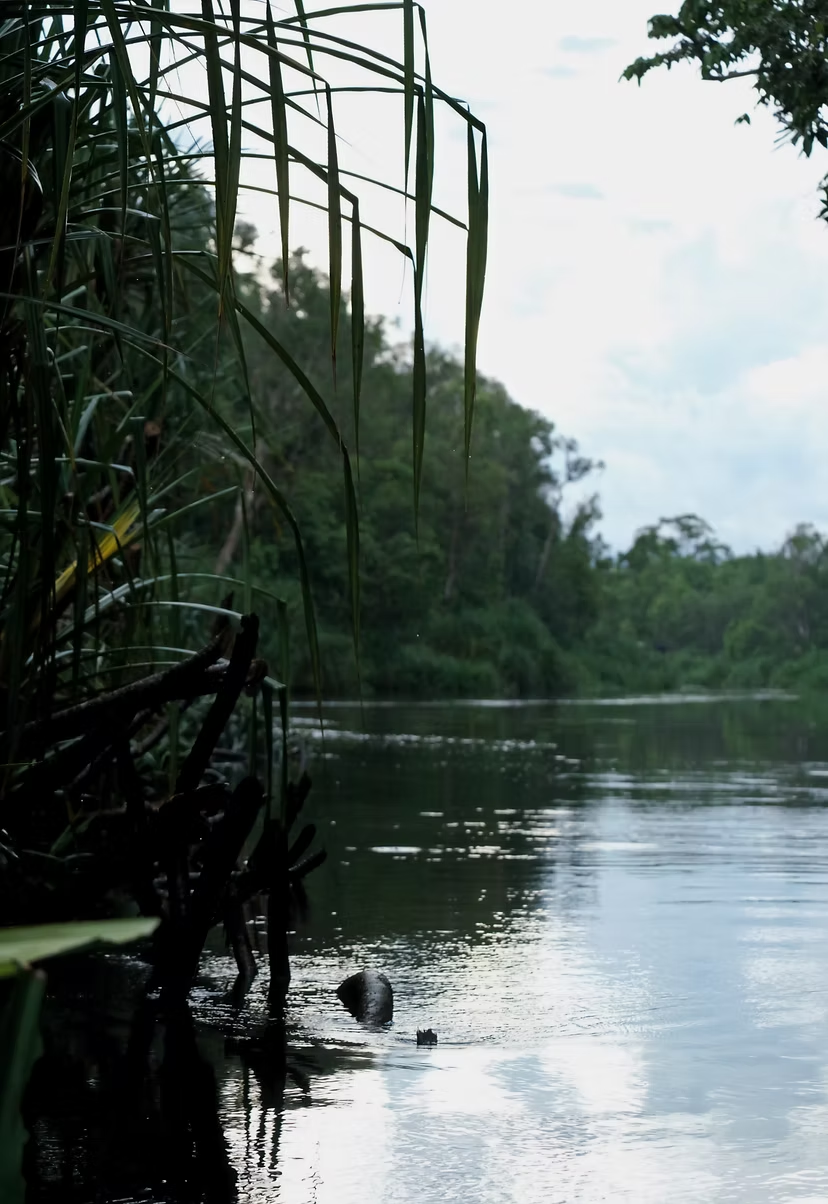
Borneo river forest
Sound bathing in the rainforest
There is a particular quality to the silence of Tanjung Puting. It is not empty — it is layered. The low pulse of the river, the percussion of rainfall on leaves, the distant call of a gibbon dissolving into the canopy. Within hours of arriving, something in me slowed.
I found myself wondering whether the constant, layered sound of the forest was part of why I settled so quickly — as if a steady, non-threatening soundscape let my body assume there was nothing to brace against. Straining to hear the furthest sound felt oddly calming, not effortful.
It's one reason I now like to begin a session with sound, before any movement.
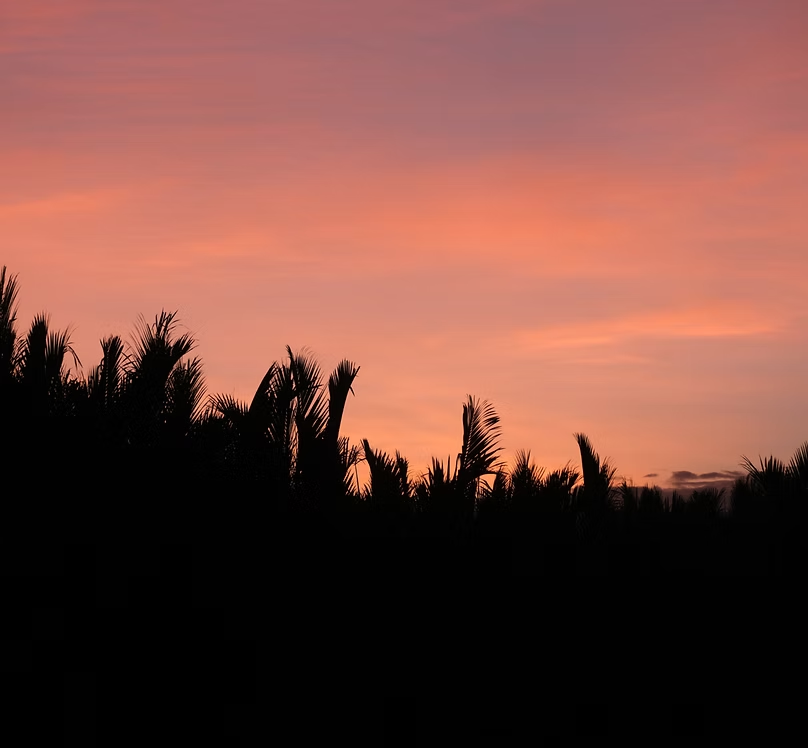
Borneo sunset
Scent, ceremony, and the intelligence of slow movement
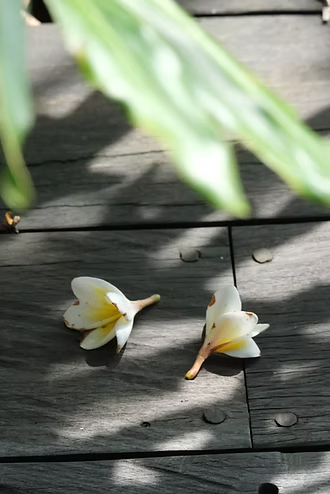
Ubud arrives through the nose before the eyes have time to adjust. The smoke of incense from temple offerings, the dense sweetness of frangipani. These didn't feel like decoration — smell reaches you before thought does. Over days, the daily canang sari offerings started to feel like small, repeated cues to pause.
Balinese dance struck me as a kind of deep attention practice. The rapid, precise eye and hand movements demand so much presence that there seems to be no room left for an anxious inner narrative. And underneath all of it: slowness — not as an aesthetic, but as something the body seemed to need.
It left me experimenting with slow, deliberate eye and hand movement in my own practice, and with scent as a way to open a session. Bali reminded me that ceremony isn't decoration. It's a way of telling the body it's safe to settle.
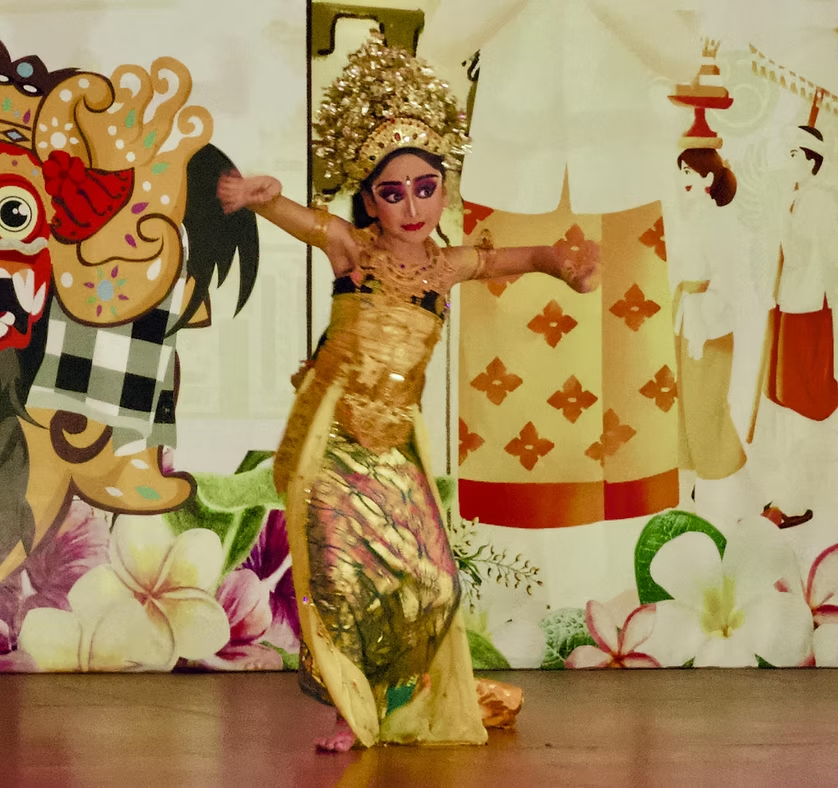
Balinese dance
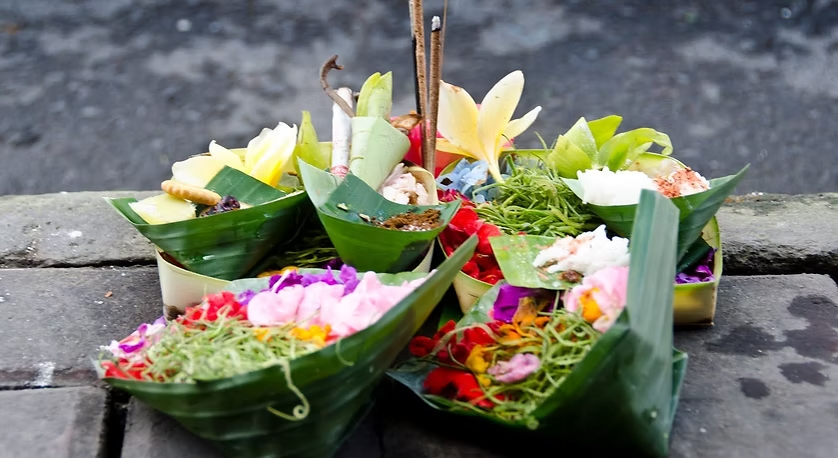
Canang Sari — a daily offering made by Balinese Hindus as a gesture of thanks
Rice terrace view from Rumah Subak villa
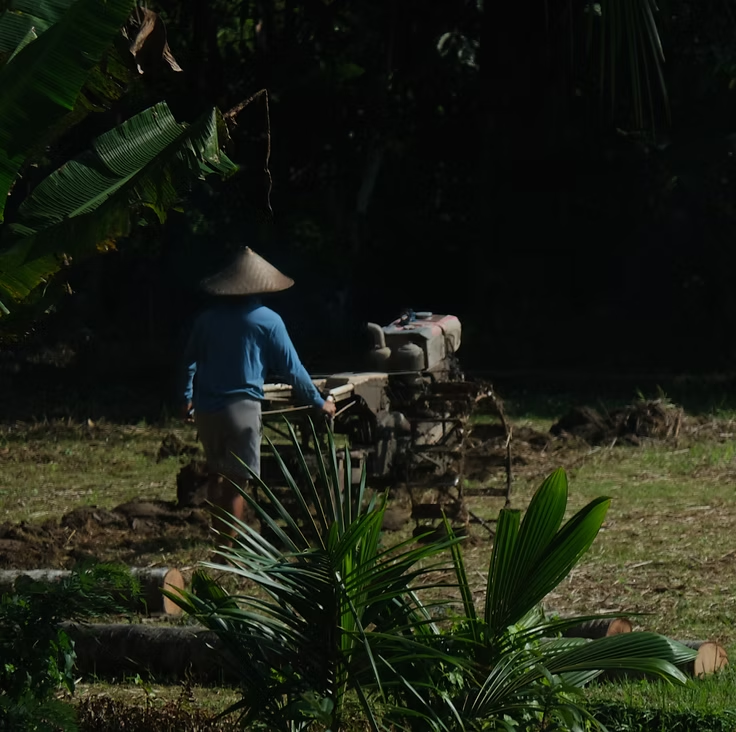
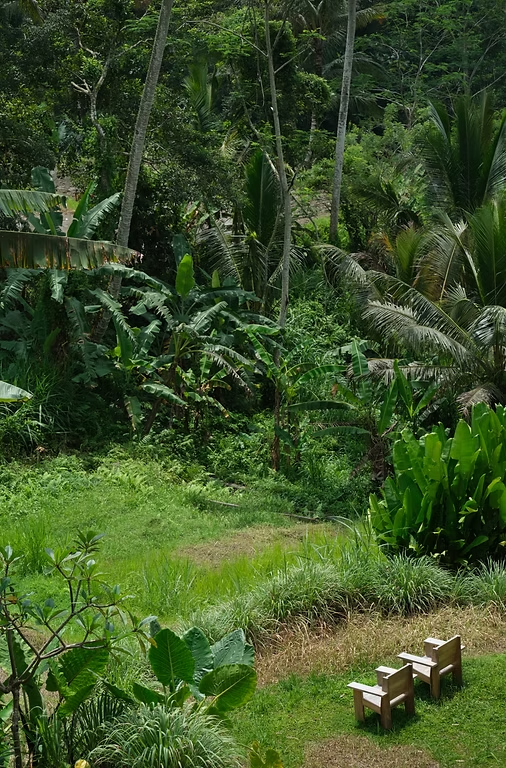
Our base in Ubud was Rumah Subak — a private villa surrounded by rice terraces, whose name honours the subak, the ancient Balinese water-sharing system that UNESCO has recognised as a World Heritage cultural landscape.
The space itself became part of the trip: its silence, its proportions, its relationship with the land.
The rest
Frangipani flower
Visual stillness and the rest of the thinking mind
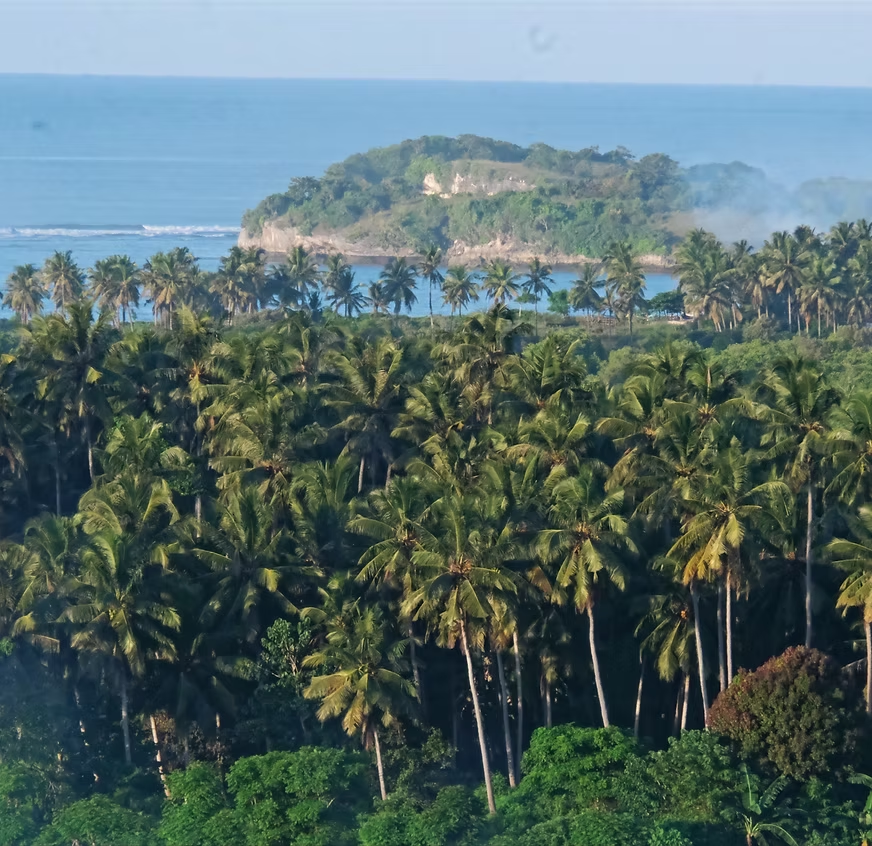
Sumba offered something increasingly rare: visual sparsity. Vast grasslands, open sky, megalithic stone tombs rising from the earth, the horizon unobstructed. No notifications. No visual noise. No demands on attention.
With nothing pulling at my attention, my mind seemed to genuinely rest — a soft, undirected gaze rather than the constant low effort of scanning and deciding. I don't have the science for it, but the difference in how I felt after a few days of open horizon was hard to ignore.
Sumba gave me the idea of treating visual and informational quiet as something worth building in on purpose: open-horizon gazing, walking on natural ground, longer stretches of silence. Stillness didn't feel like passivity. It felt like the body doing real work.
Sumba landscape

Sumba natural salt water pool
The nervous system doesn't respond to information. It responds to experience.
Virginia Parmentola
You can't think your way into rest — you have to feel it, move through it, be held by an environment that speaks the language your body already understands.
What Borneo, Bali and Sumba each offered was an encounter with places and practices that, over a very long time, have learned how to help a body settle.
I don't think rest is a luxury. I think it's a basic human need, and that the simplest ways to reach it are often the oldest ones. My work sits somewhere between that older knowledge and the lives the people I see are actually living — in cities, in offices, in bodies tired of performing.
This trip shaped how I work. What I noticed there is now part of how I think about every session.
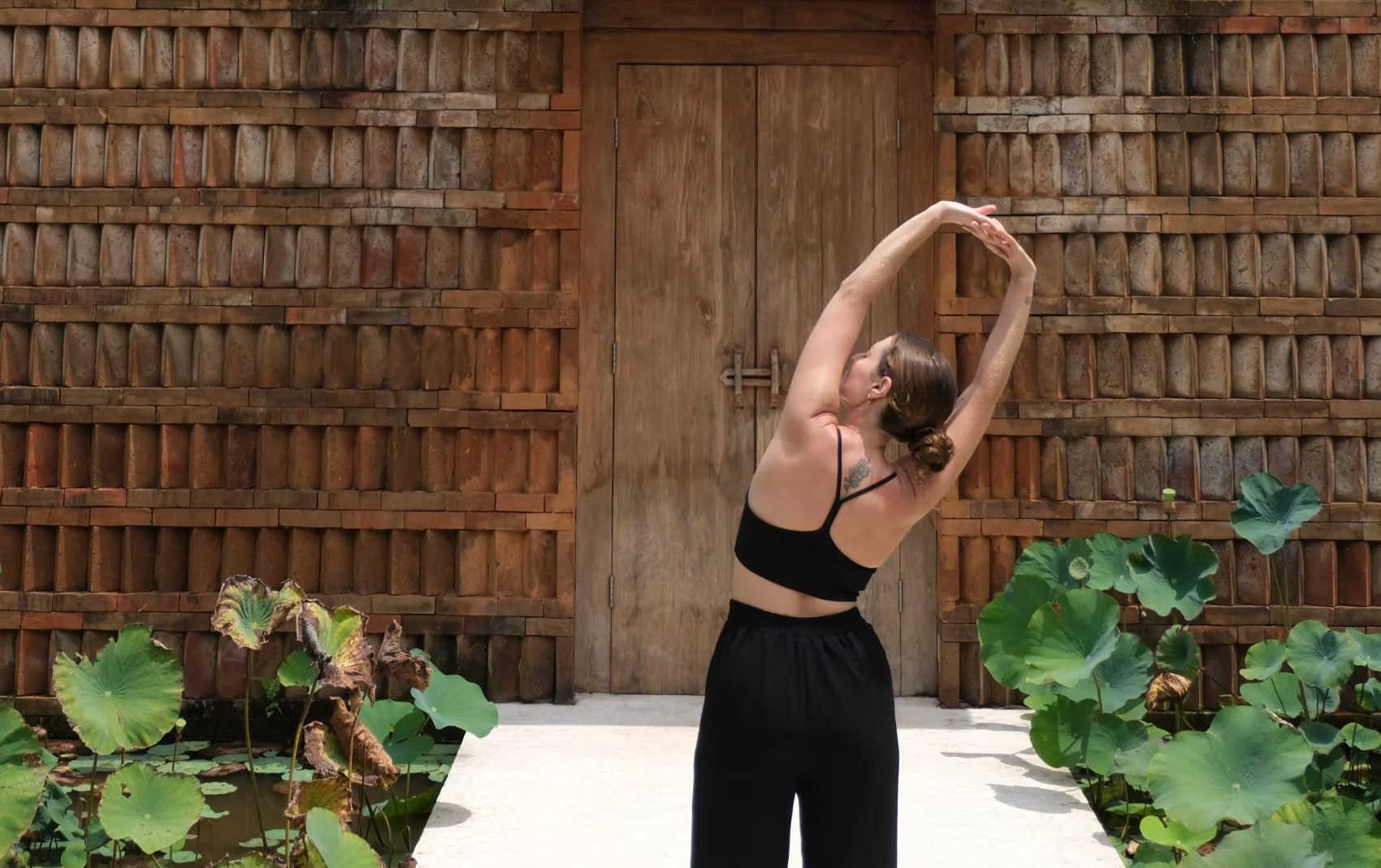
Virginia at Rumah Subak
Experience the practice
Some of what I noticed on this trip is woven into the session. Discover the INTERVAL experience.
Book your sessionPhotographyReginaldo Contreras & Jorge Suárez